Uncategorized ·
A warehouse worker in Dallas gets a text about a job offer from a staffing agency he has never heard of. Before replying, he searches the company name. If he finds a real website, a verified business profile, and the same office address in several places, he answers. If he finds nothing, he deletes the message.
Recruiting scams are common enough that the Federal Trade Commission publishes warnings about fake job offers. Legitimate staffing agencies pay the price, because cautious candidates and employers now verify before they engage.
Why Verification Matters More in Recruiting
A staffing agency asks people for personal information, such as resumes, work history, and sometimes identification for payroll. Candidates know that scammers ask for the same things. Employers hiring through an agency want proof that it is a real company with a physical presence and a track record.
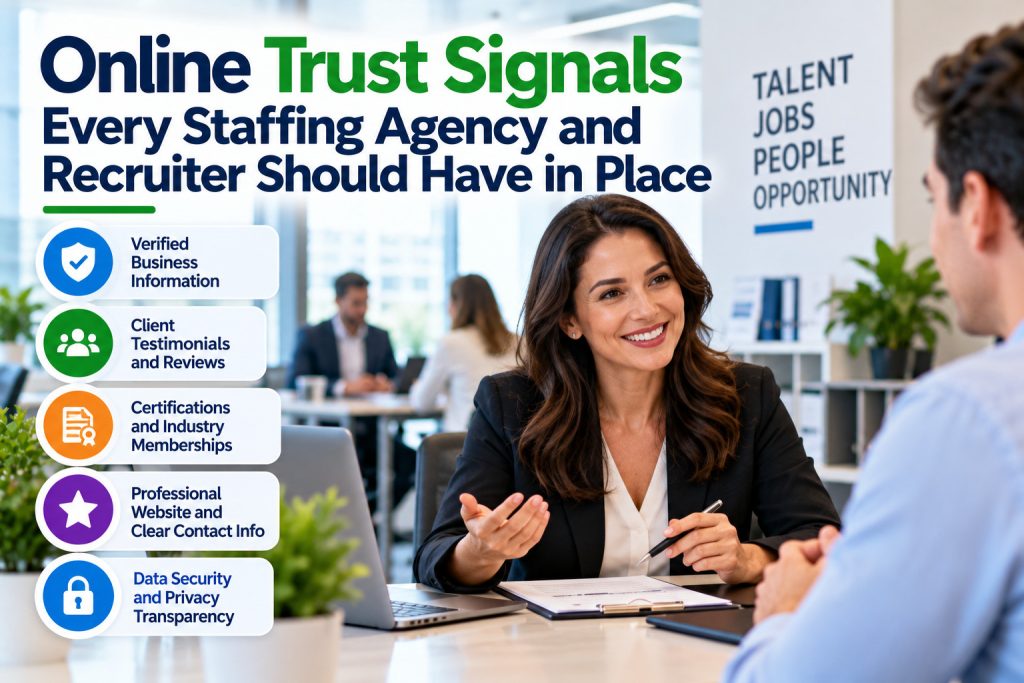
Trust signals give both groups a fast way to check you out. They include a professional website, a consistent business name and address across the web, a verified Google Business Profile, and recruiters with real profiles on professional networks.
Practical Trust Signals to Build
Use a company email domain instead of a free email address for recruiting messages. List your office address, phone number, and hours on your website, and make sure they match your Google profile. Publish a short page explaining how your hiring process works, including a clear statement that you never charge candidates to apply, if that is true for your agency.
Show who you are. Add recruiter names and photos to your team page. Display any staffing industry memberships or state licenses that apply to your business. These details help a nervous candidate decide that your message is real.
Directory Listings Add Another Point of Confirmation
When someone searches your agency’s name, consistent listings across several platforms help confirm you are an established local business. Mismatched addresses or old phone numbers raise doubts, so audit your listings each year.
Business directories also help employers who prefer to browse. Listing your firm in the Employment and Recruitment category on Buddy Links gives local companies another way to find your agency and confirm your contact details. Keep your Buddy Links description specific about the industries and job types you staff.
Make Your Agency Easy to Verify
Candidates and employers both want proof before they trust a recruiter. Use a company email, publish clear contact details and hiring policies, show your team, and keep your information consistent on Google, your website, and directories like Buddy Links. Those steps make it easier for good candidates and clients to reply with confidence.
Frequently Asked Questions
They often check for a professional website, a company email domain, a physical address, and consistent listings online. The FTC advises job seekers to be wary of anyone who asks for payment to get a job. Agencies that make this information easy to find earn trust faster.
Recruiters can use professional networks, but their profiles should clearly connect to the agency with a matching job title and company name. Messages from anonymous or brand-new accounts look suspicious. Many agencies ask recruiters to link to the company website in their profiles.
If your agency has an office where candidates or clients can visit, a verified Google Business Profile is a useful trust signal. It shows your address, hours, and reviews in one place. If you work remotely, follow Google's service-area business guidelines instead.
Post a warning on your website explaining how your recruiters contact candidates and which email domain they use. Report impersonation to the FTC at ReportFraud.ftc.gov and to the platform where it happened. Keeping your official listings accurate helps people confirm which contact details are real.