Uncategorized ·
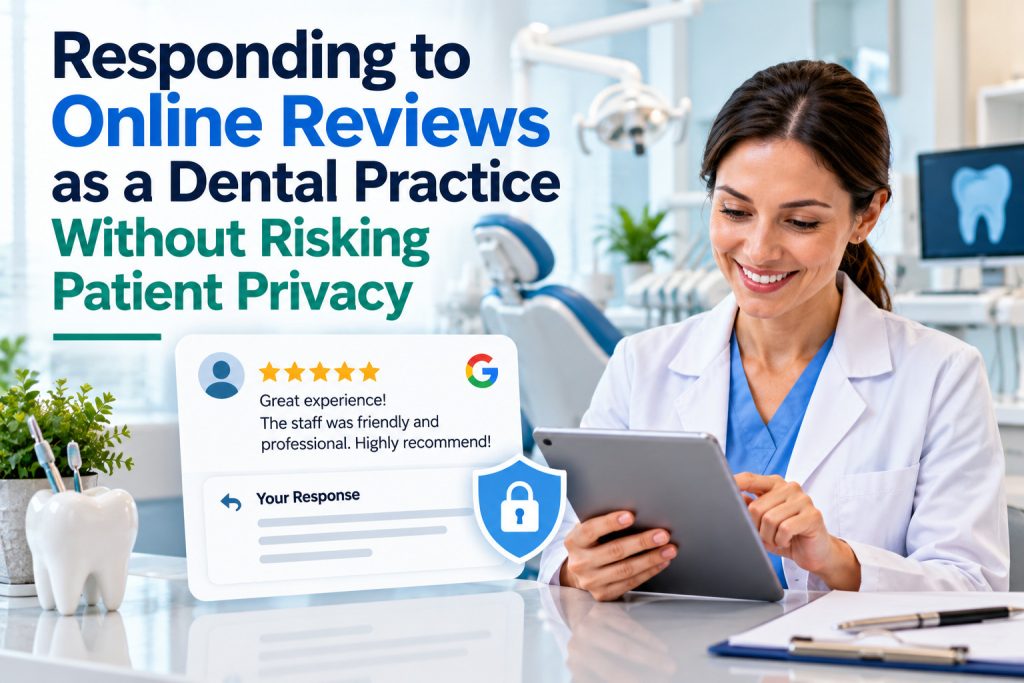
A patient leaves a one-star review saying her crown fell off a week after the appointment. The office manager wants to explain that the patient skipped her follow-up visit. Typing that reply would feel satisfying for about ten seconds and could create a serious privacy problem for the practice.
Dental offices depend on reviews as much as any local business, but they operate under rules most restaurants and retailers never think about. A good review strategy for a practice starts with knowing what you cannot say.
Privacy Rules Change How You Reply
Under HIPAA, a dental office generally cannot confirm that someone is a patient or discuss their treatment in public, even when the patient shared those details first. The U.S. Department of Health and Human Services has taken enforcement action against healthcare providers who disclosed patient information in review responses.
The safe approach is a general reply that does not confirm the person’s relationship with your office. Thank them for the feedback, state your commitment to patient care in broad terms, and invite them to call the office manager directly. Then move the conversation offline. Talk with your compliance advisor about a standard template your team can follow.
What Prospective Patients Notice
People choosing a new dentist read reviews for patterns, not single complaints. They look at how recent the reviews are, whether staff names come up in positive comments, and how the practice handles criticism. A calm, professional reply to a negative review often reassures readers more than a page of five-star ratings with no responses.
Ask satisfied patients for reviews at natural moments, such as after a successful cleaning or the end of orthodontic treatment. Avoid offering discounts or gifts in exchange for reviews, since Google and the FTC both prohibit incentivized or fake reviews.
Keep Your Practice Information Consistent
Reviews only help if patients can act on them. Make sure the practice name, address, phone number, and hours match across your website, your Google Business Profile, and the directories where you appear. A patient who reads good reviews and then finds a wrong phone number may give up.
Health-focused directory sections give patients another way to compare nearby offices. Listing your office in the Dental Care category on Buddy Links puts your verified details next to other local practices, which helps patients who prefer to browse before they call. Review that Buddy Links listing whenever you add a dentist or change your hours.
Protect Privacy First, Then Build Trust
A dental practice can earn trust online without discussing a single patient’s care. Use a privacy-safe reply template, ask for reviews consistently, and keep your contact details accurate everywhere patients look. Those three habits help your reputation grow steadily, one appointment at a time.
Frequently Asked Questions
Yes, as long as the response does not confirm the reviewer is a patient or reveal any treatment details. Keep it general, polite, and short, and invite the person to contact the office directly. Many practices have a compliance professional approve a standard reply template.
Yes. Asking for honest reviews is allowed and common. Avoid offering anything of value in exchange, and do not ask only happy patients while discouraging others. Google's review policies prohibit selective solicitation and incentives, and the FTC has rules against fake or bought reviews.
You can flag reviews that violate a platform's policies, such as spam, hate speech, or reviews from someone who was never a customer. You generally cannot remove a review because it is negative. A thoughtful response is usually the better use of your time.
Patients often check more than one source. Directory listings and review sites give them a way to confirm your details and compare practices. The specific weight people give each source varies, so focus on accuracy and professionalism wherever your practice appears.